Book for Parent to Read to a Two Year Old
The Just Parenting Books Y'all'll Always Demand to Read

Photo: hudiemm/Getty Images
I believe that if you're going to invest your time and money in reading a parenting volume, information technology should exit you feeling ameliorate than y'all did before — but not in an easy or cheap way, with ten steps or a "program" for success. Instead, the best parenting books should brand us experience ameliorate in a complicated, hard-truth fashion. We can't really control things (similar our kids), only at least we aren't alone.
Parenting books, if they're worth their salt (and most aren't), tend to lead united states back to ourselves and toward a reckoning with our own parentage. Stuff comes up. In this way, they're a lot like parenting itself: We want to shape our children into something other than our ain image (something amend). Hoping for this is a trap, ane that's incommunicable to avoid.
The very best parenting books are better than the intentions we bring to them. The good ones are both consoling and challenging, reminding us that to be a parent who is present, and forgiving, and kind, yous must offset be all of these things to yourself. (Harder than you'd call back.) The parenting books listed hither are some of the best of the best.
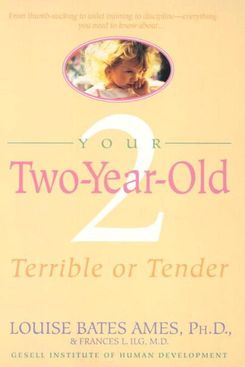
This is volume is part of a series of the best petty books most child development. They're all really fiddling — about 150 pages (a tertiary of which are black-and-white photograph illustrations of children from the '70s) — and follow the same general formula: hither's what yous're dealing with, hither's what tends to work, isn't it fascinating!, do what works and it will get better soon. I goddamn love them.
The late co-authors, Louise Bates Ames and Frances L. Ilg, were psychologists and co-founders of the Gesell Child Development Institute at Yale, but their authorisation on the subject area feels both colloquial and encyclopedic, like they're describing a honey friend they've spent their whole lives observing and thinking about. Only this friend merely so happens to exist your child, which ways they must exist spying on her from the great Yale tenure in the heaven (then hopping in a fourth dimension machine to publish these books in 1976, forty years earlier she was built-in).
Your mom might have read these about you. If so, ask to borrow them. I promise they are non as well boomer-authoritarian, and will only make y'all feel meliorate about your child. "Recollect that television can be your friend," Your Three Year Old: Friend or Enemy offers. "Wisely used, it can proceed a kid happy, well behaved, and out of difficulty for long periods." This must be what Amazon commenters hateful by the advice being out-of-date but I, for one, notice it every bit relevant as e'er. Do whatever it takes to go by without causing as well much of a fuss, the book seems to fence. The authors promise smoother sailing in a few months when there's difficulty, and affectionately sing the praises of the item sweetness and creativity of immature children. I detect their tone to be tender but consoling, their approach the perfect mix of no-nonsense and wildly empathetic.
Read these books with a glass of wine after bedtime to remind yourself your kid is non a fact a monster. Revel in the fleeting particulars of him at this age. Express mirth when the best advice the authors tin come up with for stubborn 3.five-year-olds is this: Send them to preschool, because they'll behave amend for people who aren't their parents.
Your 2-Twelvemonth-Old past Louise Bates Ames & Frances L. Ilg
Farther READING
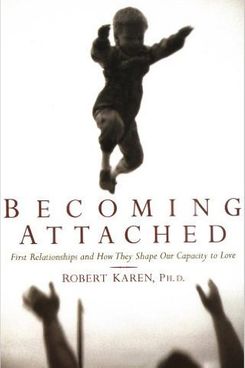
This occasionally dull-going merely fascinating book goes deep on the history of attachment theory and its current renaissance, raising questions like: In what specific ways did my parents ruin me for all future relationships?
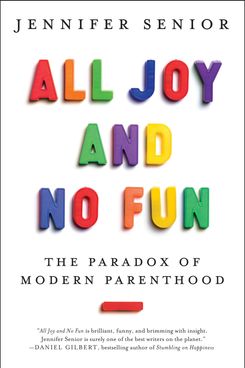
This book is a corking respond to every time you lot've ever wondered, "Is information technology just me, or is existence a parent bad in a very detail way correct now?" A leading question, maybe, but Senior has convinced me that the answer is "Yeah." Inspiring either a consoling self-forgiveness or a maddening burn under i's ass (both, i hopes), old New York staff writer Senior winningly leads us through the world of modernistic parenthood with both depth and breadth, in a vocalisation that is insightful, relatable, and genuinely searching.
Structuring her book effectually portraits of a handful of American families from all over the country, Senior goes with them to soccer games and PTA meetings, sits with them at dinner time, interviews them during nap fourth dimension and right in the thick of things, capturing that securely familiar day-to-24-hour interval survival that characterizes the reality of life with kids. Senior weaves in existing research on the psychology and sociology of parenthood from the past l years, and highlights what'due south changed and what hasn't to great effect. (Her book'southward bibliography would make an excellent syllabus.)
Senior concludes that this particular cultural moment is a unique intersection of high emotional investment (resulting from having children later, voluntarily, and expecting to be fulfilled by them) and low structural support. What Senior's book clarifies, again and again, is that the affair that affects parents (and therefore children) the most is what gets lost in virtually conversations about "parenting": the daily, lived experience of raising children.
In other words, it's a expert book to text passages of to your friends, especially mom friends who are exhausted and behind on work and ignoring the dishes but still upward way too late and nigh to spend too much money on a bespoke Halloween costume from Etsy (let's not even talk about the ones who sew them themselves). "Our expectations of mothers seem to have increases every bit our attitudes toward women in the workplace have liberalized."
"YUP," they'll say. "Okay how bout this Moana i? It'due south good correct?"
All Joy and No Fun by Jennifer Senior
Further READING
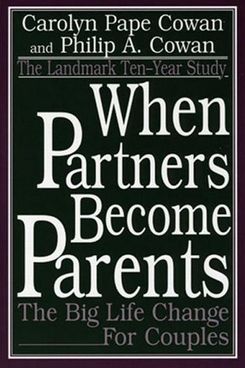
Cited by Senior throughout her book, this ten-twelvemonth longitudinal written report of the effects of parenthood on romantic partnership is wildly affirming (it'south not just you). This volume captures the ups and downs (mostly downs) of relationships during the crunch of new parenthood in a fashion that few books take since it was published in 1992.
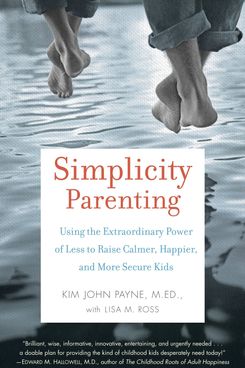
This volume is a classic parent troll, and then you'll need to be gear up for that. Read it at a time of emotional fortitude, ideally at a moment when you recollect to yourself, "Okay, things are about to get easier soon. I feel like I can finally catch my breath. Is there a homo somewhere who tin can Kondo my family life?" (The writer'southward first name is Kim and yes, I felt betrayed when I realized he was in fact an Australian man and non a Scandinavian woman sent to share the gospel of toys made from natural wood.)
In fact, what Payne calls for is reassuringly intuitive and well, nice. Payne advocates for fewer toys, less Telly (okay, "no Idiot box," but I've already edited the book in my mind), more than of a "daily rhythm," fewer stressful extracurriculars, and filtering out too much adult information like the news or shop talk. Initially, I bristled at this last proposition, but and then I was driving to preschool with NPR on when my kid piped up from the backseat: "What do hurricanes do? I hateful, what do they do to people — exercise they make them expressionless? Are at that place hurricanes here?" Okay fine. I get it.
Some of the book is besides strident or out in that location (let'due south just pretend the phrase "soul fever" doesn't occur inside these pages), just I plant myself less interested in the particulars than in Payne's underlying idea: that when we tin — when nosotros have the breathing room — it'due south worth revisiting our long-abandoned ideas well-nigh what we imagined our family unit lives would look like.
In this mode, Simplicity Parenting is a sort of belatedly-capitalist "solution" to the problems introduced in All Joy and No Fun. Senior and Payne both seem to argue that nosotros are as well stressed, likewise busy, also focused on achievement and not plenty on well-being. Payne takes these bug for granted, and spends his book offering applied suggestions to bring ease and space back into your life. While one might (and I would) argue that agitating for political change (paid family get out, universal health care, and kid-intendance subsidies, for instance) would be a much, much more constructive antidote, brusk-term deportment you can put into motion yourself — baking a cake on Sundays, say, or making an after-dinner walk a family tradition — as well sound nice.
"Fifty-fifty if some of the details were unrealistic," Payne argues, "your dreams about your family had truth to them." He may as well exist talking about this book.
Simplicity Parenting past Kim John Payne
Further READING
Pay a cosmetic visit to the wildly influential pediatrician and psychoanalyst who introduced the globe to the concept of the "proficient-enough mother."
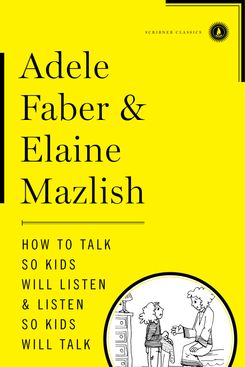
This book became an instant classic when information technology was published in 1980 and has sold millions of copies since. Show it to a bookseller and they might sigh audibly or say, "Oh yeah," with an undercurrent of resentment over all the times a customer stood before them trying to recite the title. "Information technology'due south yellow? With block letters? What we talk about when nosotros are … listening? About … talking?"
In whatever example, believe the long-running hype. Every time I recall about this book I get a blitz of tender feelings toward it, feelings that quickly shift into contending with my own urge to be re-parented, preferably by the volume's co-authors, Adele Faber and Elaine Mazlish. The two accept six children between them simply for purposes of simplicity, they write in the commencement person and have lilliputian blended children. The resulting vox is charming and funny, total of humility and compassion, like if Anne Lamott were leading a parents' support group only without the Jesus stuff.
This book really is framed past a weekly support group, with each chapter covering a week of the authors' real-life parenting workshop. If that sounds too corny for you lot, well, my god, consider the genre. But corny threshold still, consider that this means voyeuristically reading nearly a bunch of '80s adults talk nigh their feelings and their extremely specific battles with their kids and their expectations and their frustrated powerlessness (all with a blest lack of hand-wringing nigh The Dangers of The Internet). I ate it upwards.
The very start chapter is "Helping Children Deal With Their Feelings," which made me certain my own boomer parents were not among the iii million people who have purchased this book. Later on comes "Alternatives to Penalization," "Engaging Cooperation," and "Encouraging Autonomy." I must warn you: Sprinkled throughout are cartoons illustrating skillful and bad parent-kid interactions ("INSTEAD OF DENYING THE FEELING, exhibit A, GIVE THE FEELING A NAME, showroom B"), and they are drawn in a painfully amateurish style that didn't bother me and in fact seemed to brand the book experience more urgent, equally if the co-authors' eagerness overcame their embarrassment. It's very on-message.
The authors' little tips don't necessarily come naturally, but if you practise recollect to try them, simply try not to laugh when you run across how well they piece of work. It'southward most abrasive, or would be if the book weren't written in the spirit of generosity and in the interest of children and parents both feeling heard and respected and then forgiving each other when they both mess upwards more or less constantly. Corny, sure, but true.
How to Talk And then Kids Will Heed & Listen So Kids Will Talk by Adele Faber and Elaine Mazlish
Farther READING
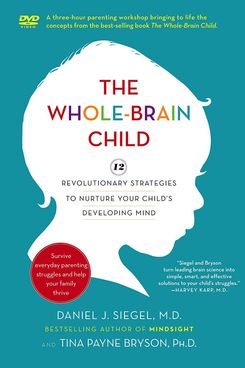
For the skeptic parent who is unmoved past anecdote (fine). This volume features a similar arroyo of acceptance but makes utilize of basic neuroscience to dorsum itself up — knowing what parts of the brain are activated mid-tantrum, for example, might change how nosotros confront one.
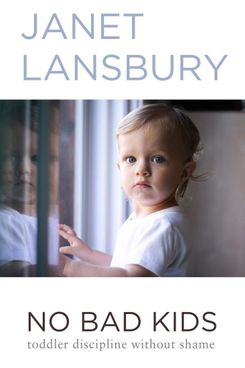
Lansbury is a erstwhile actress and model who has taught parenting classes in Hollywood for decades, but found wider success as a prolific author and podcaster and full general toddler consigliere. A couple of my mom friends and I simply refer to her as "the guru" and I still don't know if we're joking or not. Her popular books are self-published compendiums of some of her best blog posts (when I filled out the contact form on her website to asking a review copy, I got a prompt reply from Michael L., who introduced himself as "Janet's hubby and Mailroom Supervisor"). Lansbury's general approach or "philosophy" is that we should care for children with respect, and, whenever possible, attempt to meet them where they are.
I am commonly averse to "schools" of parenting (and annihilation overarching when it comes to kids), only I make an exception for Janet because: (1) The phrase "without shame" is in the championship and shame might exist one of the ruling negative emotions in my life and if there's anything I'd like to spare my son it'south that, and (two) Lansbury brings a self-enlightened resistance to dogma that'south refreshing and reasonable. She seems to want to aid our children blossom into their best, most authentic selves without totally fraying our nerves in the process.
It's that final part that endears Janet to me most of all; without it, a lot of what she advocates for would seem heedlessly optimistic or but absurd. You don't demand to "respectfully" tell your toddler to stop boot you lot in the damned face, and you lot need to know the limits of your own patience before you let your child cross them. They're kids, she argues, and they want to know that y'all're in charge. A parent should embody, per the guru, the calm, "unruffled" bearing of a CEO.
Are in that location weird implications of aspiring to exist a CEO-mom? Possibly … merely let'due south only say it'southward a helpful image, something to come back to when y'all're feeling worn down or having a tough week. In that location'southward value in a parenting mentor who seems to more interested in procedure than product (or is it the other way around?). Unruffled, proud, self-confident. I never know if she means the states or the children — how overnice that both are taken into account.
No Bad Kids by Janet Lansbury
FURTHER READING
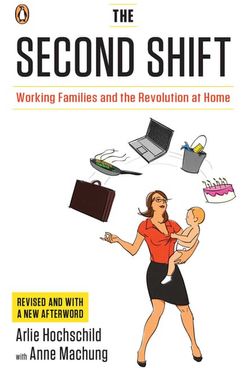
Because it's easier to be unruffled when you don't accept to do all the domestic labor yourself. This groundbreaking portrait of working parents and how they carve up household tasks is a few decades quondam only sadly equally relevant as ever. I start read this as a freshman in higher, simply I still call up nearly it all the time.
The way we argue, what we value, our level of competitiveness, the amount and kind of guilt we possess — so much of our identities are adamant past the crapshoot of sibling dynamics. This proved to exist fertile basis for Adele Faber and Elaine Mazlish, the authors of How to Talk And so Kids Will Listen … The authors' book on siblings has the same instructive cartoons, the same entertaining group-therapy frame, and a similar unwillingness to sacrifice depth at the altar of the digestible message.
While specific tactics are provided for everything from handling violent concrete fights to avoiding comparison and overdetermined family roles, the most constructive parts are in-scene at their parenting workshops, where the parents depicted offset limited desperate exasperation and disbelief, then reveal a bounty of alluring interpersonal anecdotes from their ain childhoods, and finally, arrive at an actual reckoning. Of course siblings fight. They're natural rivals, competing for resources (actual and emotional). How many of u.s. can spend more than a few days with our own siblings without regressing into moody teens?
The volume ends with middle-aged moms and dads calling their siblings (sometimes estranged, oft but begrudged), and finding themselves able to forgive or at least sympathize and connect with them in a fashion they couldn't before they saw the dynamics play out in their own children. There are ways to alleviate this, the volume argues, to manage the inevitability and to brand information technology less wounding, or less defining. This may sound grandiose, but that'southward merely considering y'all oasis't read the book yet.
Siblings Without Rivalry by Adele Faber and Elaine Mazlish
FURTHER READING
File under: books to assistance you straighten your own shit out earlier you repeat the bike despite actively fearing it exactly (wooo!). Gifted kid or not, the particular family unit dynamic captured by this book is one that I find all the time (especially in myself): Kids who learn all as well quickly how to please their parents at the expense of actually knowing what they like or want.
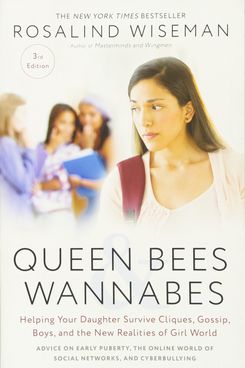
This book served as the inspiration and source material for Tina Fey's Mean Girls. Whether that serves every bit disclaimer or recommendation is upward to yous. Queen Bees seems to meet teens on their level, which is probably what makes it so effective (if not occasionally alarmist, or maybe that's the super Christian nerd in me talking?).
Rosalind Wiseman had been visiting loftier schools and leading workshops with adolescents long before she introduced us to Girl World and the taxonomy of teenage girls. There's the Mean Girl, The Wannabe, The Bystander, The Broker — Wiseman could be defendant of many things but missing the opportunity for a coinage is not i of them.
Where others might be more dismissive, Wiseman takes the challenges and power dynamics and high-stakes anxieties of Girl World seriously. It'southward clear she has neat empathy for and insight into not just the drama and the gunning for social condition, but the bigger motion-picture show, besides: questions of intimacy, self-worth, and trust.
My son is simply in preschool, so I had the luxury of relating more to the teens than to the parents-of-teens, the latter of whom often seem to find themselves completely out of their element in a style that recalls the earliest days of parenting a newborn. If the glut of books nearly parenting teens is any indication (my personal favorite, by title if not painfully corny content: Yes, Your Teen Is Crazy!), this is a conundrum that's inevitable and inherent to raising a kid. But accepting that doesn't brand it any easier. For someone in the thick of parenting a teen, this volume would be a small mercy, touching as it does on the subjects your kid would be also embarrassed or annoyed to explain to you lot on their own.
Queenbees and Wannabes by Rosalind Wiseman
Farther READING
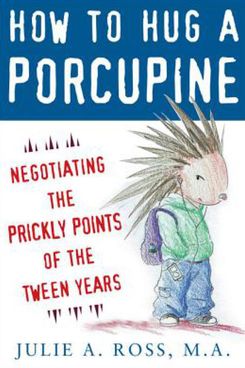
For parents whose kids aren't yet mean girls: This book is full of sympathy and brimming with tips (and an abundance of metaphors, exist warned), and eases you in with an ambrosial cartoon porcupine.
This book is the ultimate compendium of mag-style counterintuitive parenting-trend pieces. "Why our instincts most children tin can be and then off the mark," its marketing copy argues, promising real data and the always-beguiling shattering of conventional wisdom. I don't mean to sound dismissive, as NurtureShock is both a neat read and manages to make its points without trafficking in parental anxiety. If annihilation, the book — with capacity on kids needing more than sleep, being praised too much, labeled gifted besides early — seems to contend that it's our own misplaced agita that causes problems. As I read it I was overflowing with the urge to share all of my new "actually" Child Facts with my married man, who would reply with a polite "Wow."
If most of the volume argues that parents should worry and interfere less, the standout affiliate is a notable exception. Titled "Why White Parents Don't Talk Most Race," it should exist necessary reading for all those implicated. Kids practise notice divergence, particularly race, and hoping to heighten your own every bit "colour-blind" is both naive and dangerous. If yous avoid the subject, you risk your kids internalizing awkwardness and assuming you're racist. This might sound intuitive to some, just we should all recollect the powerful consequences of ideas we consider "instincts" or "conventional wisdom" or "user-friendly theories for me."
The volume's ideas — children are contradictory and circuitous, cannot be hacked, and should be allowed to develop on their own time — brand for a less-than-straightforward read. That the authors managed to write such a commercially successful book (the ambitious title doesn't injure) is a attestation to their deft skill every bit much every bit their genuine intentions.
NurtureShock by Po Bronson and Ashley Merryman
FURTHER READING
Cited by everyone from Jennifer Senior to Malcolm Gladwell, this book was a watershed examination of the sometimes unexpected (to some!) roles class and race play in American childhoods, and along the way questions the "concerted cultivation" approach of the center-course parent.
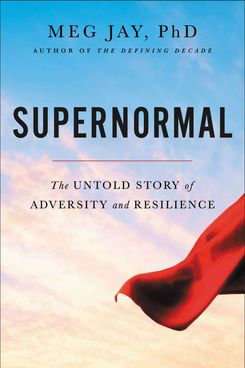
If you haven't noticed or made fun of them notwithstanding, parenting civilisation'southward trendiest desired attributes are GRIT and RESILIENCE. Grit is, of course, the goofier of the two, evocative of both dirt and a southern breakfast food. Simply who doesn't want to exist resilient? Who doesn't want their children to exist?
With this book, longtime clinical psychologist 1000000 Jay challenges us to interrogate our assumptions about resilience, to grapple with what's really going on inside a child we want to praise for overcoming adversity. Children adapt well, about too well in some cases, and the coping skills that aid children survive may be the ones preventing them from relating equally adults. When adapting becomes a fashion of life, do y'all ever feel confident that other people volition adapt to you? Would we rather our children hibernate behind their accomplishments or have a sense of inherent self-worth?
Jay weaves new brain research, celebrity anecdotes (Marilyn Monroe's childhood spent in foster care, for case), and some choice psychoanalytical wisdom, merely the narrative centers around anonymized former clients. Jay introduces united states to each of her extremely high-achieving patients and then walks us through their painful but oftentimes common circumstances — they are children whose parents are divorced, or alcoholics, or dead; kids with disabled siblings, or abusive coaches — and then, their electric current feelings of isolation, burnout, or low.
Over half of adults experienced arduousness in their childhoods, according to research Jay cites, then these patients are not abnormal, despite feeling that way, and despite our romanticization of their resilience. These kids grow upward to exist virtually of u.s.a., actually, to whatever degree. Possibly we all need to focus on our ain shit to be the kind of parents who can really meet and accept our children, to escape the trap of choosing the appearance of "doing well" at the cost of feeling okay.
Supernormal past 1000000 Jay
Further READING
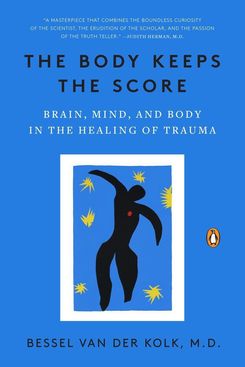
This 1 is not about parenting per se, but my experience with childbirth left me mildly traumatized in means I only truly understood after reading this book. I experience better for having read it, and better equipped, as a parent and a denizen, to run across the way trauma — beyond the buzzword — is at work in so many of our experiences.
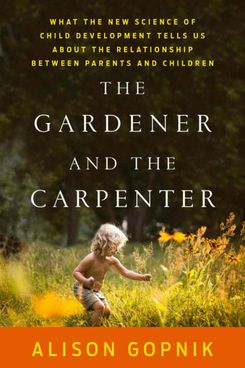
Gopnik is a professor of both philosophy and psychology at UC Berkeley. In her latest book, she explores "the new scientific discipline of child development" and what information technology tells usa virtually the parent-child relationship. She opens with a criticism of the fashion nosotros talk about raising children — "parenting" is a word, and a cottage industry, invented in the by 30 years. We should be discussing our children in language that more closely resembles a gardener'due south, every bit in tending to and caring for 1'southward garden. A gardener harbors no illusions of control, and is open to — cherishes even — the vicissitudes of her plants. She is willing to be surprised. She knows the plants grow on their ain.
Gopnik uses evolutionary psychology, neuroscience, and creature behaviorism to contend that we must have such vulnerable babies with such extended childhoods for a reason. Children, she explains with the blissful disengagement of someone whose children could merely be grown, are meant to be messy chaos agents. They are meant to learn through play and exploration, and they are bang-up at it, and will, overwhelmingly, turn out just fine, no matter how many parenting books we read. It'south a nice thought, and a welcome corrective, though 1 I tin imagine it might take becoming a grandmother before fully inhabiting.
FURTHER READING
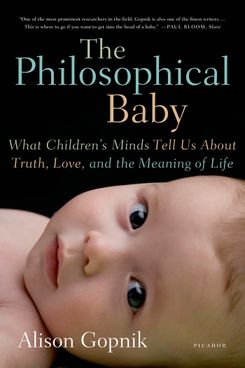
Read Gopnik'due south earlier volume equally a reminder that children requite as much equally they get, and not just considering they're cute. Gopnik brings us on a bout of the awakening consciousness of babies and shows us how much we tin can larn about the essential questions of human nature past looking to the small, screaming friends we are trying our best to proceed alive.
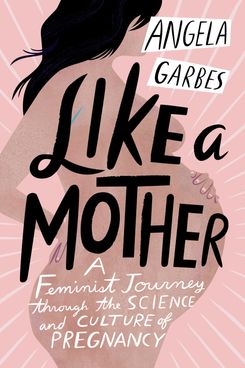
Because children aren't the merely ones developing. With a sorely needed feminist perspective and a treasure trove of accessible scientific revelations (the placenta alone!), Garbes shares her own transformation into a parent and reminds united states of america what our bodies go through in pregnancy, birth, and breastfeeding. Garbes's volume works from the radical assumption that actually, women do know what they need, which serves to highlight all the ways that inequality and gaps in structural support brand everything harder than it needs to be, especially for women of color. "Becoming a mother may be 1 of our most culturally traditional acts, but," Garbes argues, "it is besides the place where nosotros can intermission with our most limiting, oppressive traditions."
If you buy something through our links, New York may earn an affiliate commission.
hollowaytanduch70.blogspot.com
Source: https://www.thecut.com/article/parenting-books.html
0 Response to "Book for Parent to Read to a Two Year Old"
Post a Comment